
The illusion of efficiency: what groups lose when they rush to a plan
 Lisa Gill
28 August 2026
Lisa Gill
28 August 2026
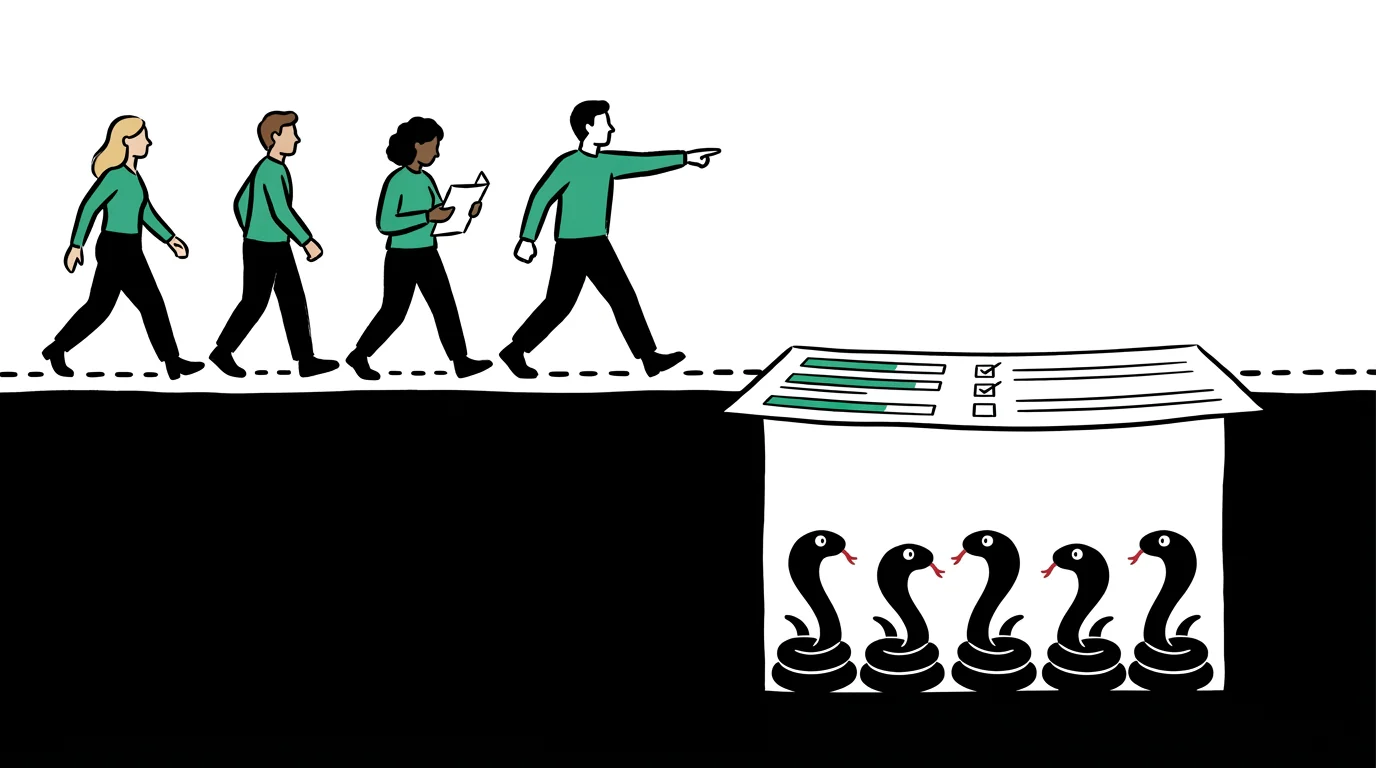
You’re gathered together with your coworkers for two days for a team offsite. Since you usually work remotely, these days are precious. Everyone is usually extremely busy so the pressure is on to make this time you are taking away from client work really count. At the end of day one, at least a third of the group is frustrated. How are we going to get through all of the topics we’ve identified as being important? When are we going to make a decision? Why do we seem to be unable to progress towards an action plan?!
Recognise this scenario?
This is the situation we often find ourselves in at Tuff when we meet in person twice a year as a whole company. Twenty five people in a room, all committed to making the most out of this time together. Two weeks ago when we met in Stockholm, we ended up in the frustration zone I described above.
Put yourself in our situation. What would you do on day two? Maybe you’d suggest a clever facilitation process or structure to streamline the discussions and get us back on track. It’s a natural tendency to want to bring some order to the chaos.
But here’s the problem with doing that: you’re actually robbing the group of a crucial capacity that will be needed for any of those beautiful action plans to actually come to fruition.
In our case, on the morning of day two, Karin reminded us of something important when thinking about collaboration.
Collaboration pitfalls
She drew on the white board a line and a semi circle. What we usually focus on when collaborating, she said, is surface issues. We spend most, if not all, of our time discussing different ideas, plans, actions, decisions and results. When we get stuck, we tend to push this further – often the loudest or most convincing voice wins. What’s more, we tend to evaluate efficiency based on criteria like: how much did we get done? How quickly did we make a decision? How clear and professional-looking is our action plan?
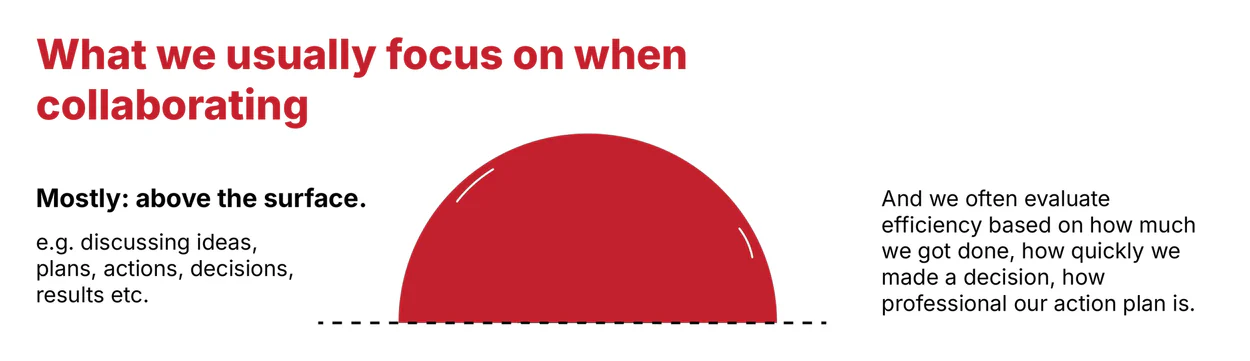
The problem is, it doesn’t matter how clean and impressive our gantt chart looks, or how many decisions were agreed if no one takes ownership of those tasks. Or commits to the outcomes we agreed to. Or feels able to trust the colleagues they’ll be working with. Or feels clear about the purpose of what we’re doing and the part they play in it.
The domain we tend to neglect
What Karin reminded us of at our team offsite is that the source of our efficiency and results will come from what is under the surface.
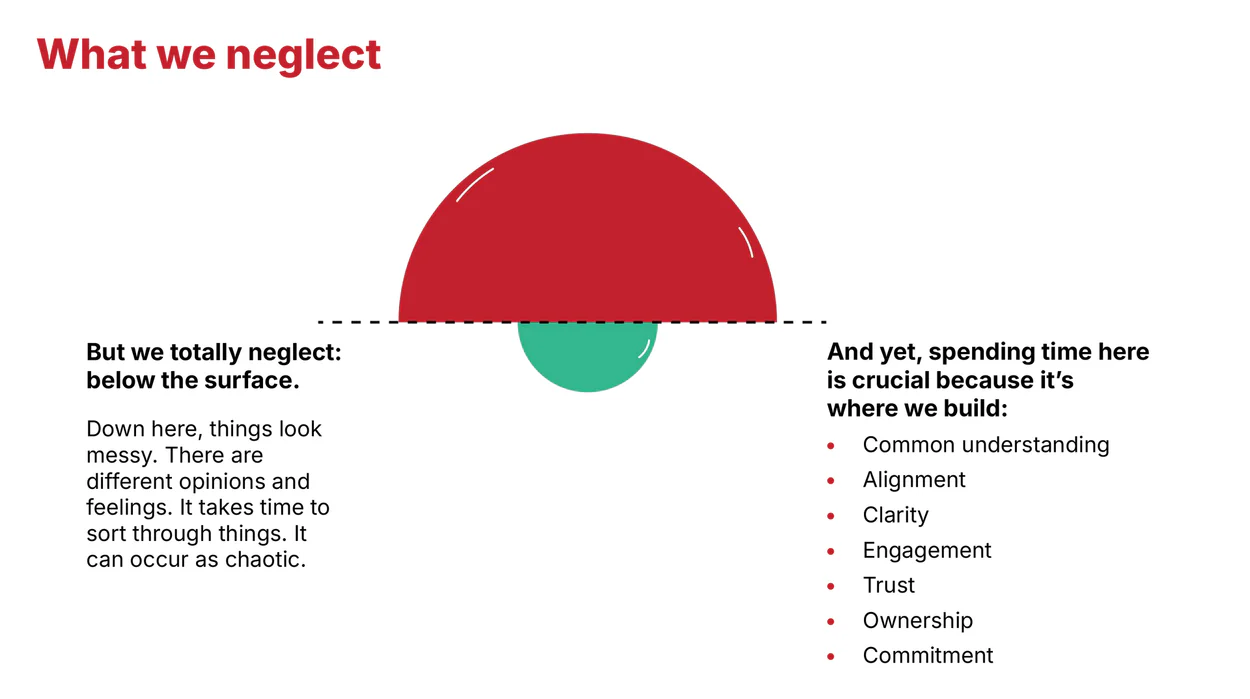
This is the domain of the invisible. Down here, things look messy. There are different opinions and feelings. It takes time to sort through things. It can occur as chaotic. When we spend time here, it’s easy to feel like we aren’t getting anywhere.
And yet, it is under the surface where we build things like a common understanding, alignment, clarity, trust, relationships, engagement, ownership and commitment around the surface issues.
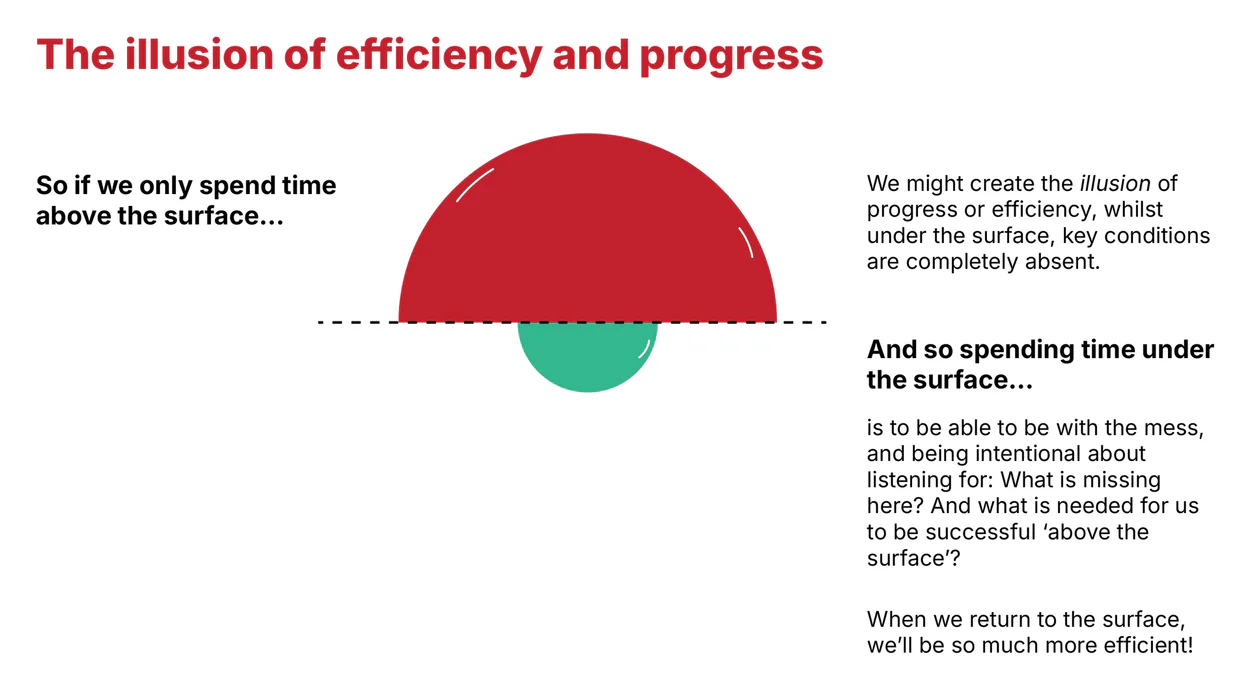
When we spend all our time above the surface, we create the illusion of efficiency. But we often lack crucial ingredients for bringing those plans to life.
If we try to ‘paper over’ the messiness of what is bubbling under the surface, we rob the group of crucial capacity-building work. Great leadership is the ability to listen under the surface. To listen for what’s missing. For example, sometimes there can be ownership, but no commitment. Or perhaps there is a total lack of clarity and we need to spend some time getting alignment.
Some of us in Tuff have worked here for twenty years. We even train others in this stuff. And yet it’s so easy to get swept up in the productivity paradigm and forget what true collaboration is.
Groups that embrace conflict get the gold
After Karin’s white board moment, and a short discussion about our reflections on this diagram, we continued. By our check-out circle at the end of the day, the group marvelled at how much we had managed to achieve. Miraculously, we had managed to check off a huge list of topics that the day before we would have thought impossible.
Decades of research on group dynamics shows us that groups need to go through this conflict stage to get to the other side: high performance. If we try to smooth over the conflict, we will never reach our potential.
So here are a few reflection questions for you to consider:
When working with a group and it gets into the messy ‘groan zone’ where there is no clear agreement or path forward yet, what is your tendency? Do you try to ‘put a lid’ on the mess, and clean it up with something? Do you use your power to ‘force’ the group onto a path forward? Do you withdraw, give up, give in? Or something else?
What ability (or abilities) could you practise to upgrade your tolerance for messy processes?
How could you contribute to a group under the surface, instead of defaulting to above-the-surface solutions?
Want to get in touch? We’d love to hear from you!
- Call us: +46 (0)8-446 16 20
- Email us: [email protected]
Want to know more about our programme?
Tuff Leadership Training Step 1